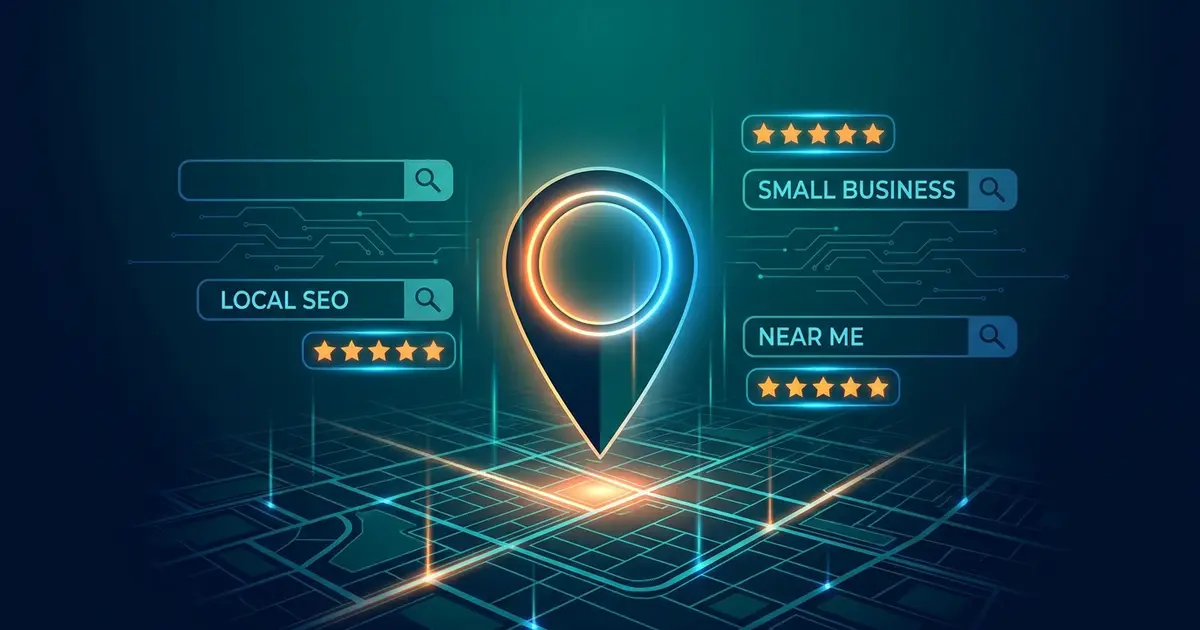
If you run a restaurant, a clinic, a law firm, or any business that serves a specific city or neighbourhood, local SEO is the highest-ROI marketing investment you can make. When someone searches "web designer in Beirut" or "accountant near me," Google's local pack — those three map listings at the top — captures more than 40% of all clicks. If you're not in that pack, you're invisible to the people most likely to become clients.
Local SEO in 2026 has evolved significantly. AI Overviews, Google's expanded local inventory features, and the growing influence of review velocity have shifted what actually moves the needle. This guide covers the fundamentals you can't skip and the newer signals that are making the difference this year.
Your Google Business Profile (GBP) is more important than your website for local search. It's what appears in Maps, in the local pack, and increasingly in AI-generated answers about local businesses. If yours is incomplete or stale, you're leaving rankings — and calls — on the table.
Fill out every field: business name, address, phone, hours, website, service areas, categories, and a thorough business description using natural language that includes your city and core services. Add photos regularly — Google rewards active profiles. Upload your menu or service list if applicable. Use the Posts feature at least twice a month to signal activity.
Google uses review quantity, recency, and response rate as local ranking signals. A business with 12 reviews from three years ago will be outranked by a competitor with 40 reviews from the past six months, even if the older business has a slightly higher average rating. Review velocity — how consistently new reviews arrive — matters more than the final count.
Build a simple system: after every completed job, send a short message with your direct Google review link. Make it one tap. Respond to every review, positive or negative — Google notices this too, and it builds trust with prospective clients reading the reviews.
Businesses that respond to reviews consistently rank 12–15% higher in local packs on average, according to local SEO studies from 2025. Responding isn't just courteous — it's a ranking tactic.
Your website still matters for local SEO, especially for ranking in the organic results below the map pack. The key is pairing your service with your city naturally throughout your content — not stuffing it, but writing the way a real person would describe your business.
Your homepage title tag, H1, and first paragraph should include your primary service + city combination. Create individual service pages for each core offering (e.g., "Logo Design in Beirut," "SEO Services in Lebanon"). If you serve multiple areas, create a dedicated page for each location rather than listing them all on one page.
NAP stands for Name, Address, Phone — the three pieces of business information that must be identical everywhere they appear online. Your website, Google Business Profile, Facebook page, Yelp, industry directories, and any other mention of your business should all show exactly the same name, address format, and phone number. Inconsistencies confuse Google's local algorithm and suppress your rankings.
Audit your existing citations using a tool like BrightLocal or Whitespark. Fix any discrepancies. Then build new citations on the most relevant directories in your industry and country. For Lebanese businesses, include local directories and Arabic-language business listings.
Publishing content that's genuinely useful to people in your city builds topical authority and earns local backlinks — the two most powerful organic ranking signals. Write about local events, industry trends in your market, case studies featuring local clients, or guides specific to your service area. A plumber writing "Common Pipe Issues in Older Beirut Buildings" will rank for far more local queries than one with a generic homepage and nothing else.
Local SEO rewards consistency and attention to detail over big-budget campaigns. Optimise your Google Business Profile, build a steady stream of reviews, keep your NAP data clean, and publish locally relevant content. These four levers, applied consistently over six to twelve months, compound into a local search presence that generates inbound leads while you focus on running your business.
We build and manage local SEO strategies for service businesses in Lebanon and the wider MENA region. Let's put your business on the map.
Talk to us