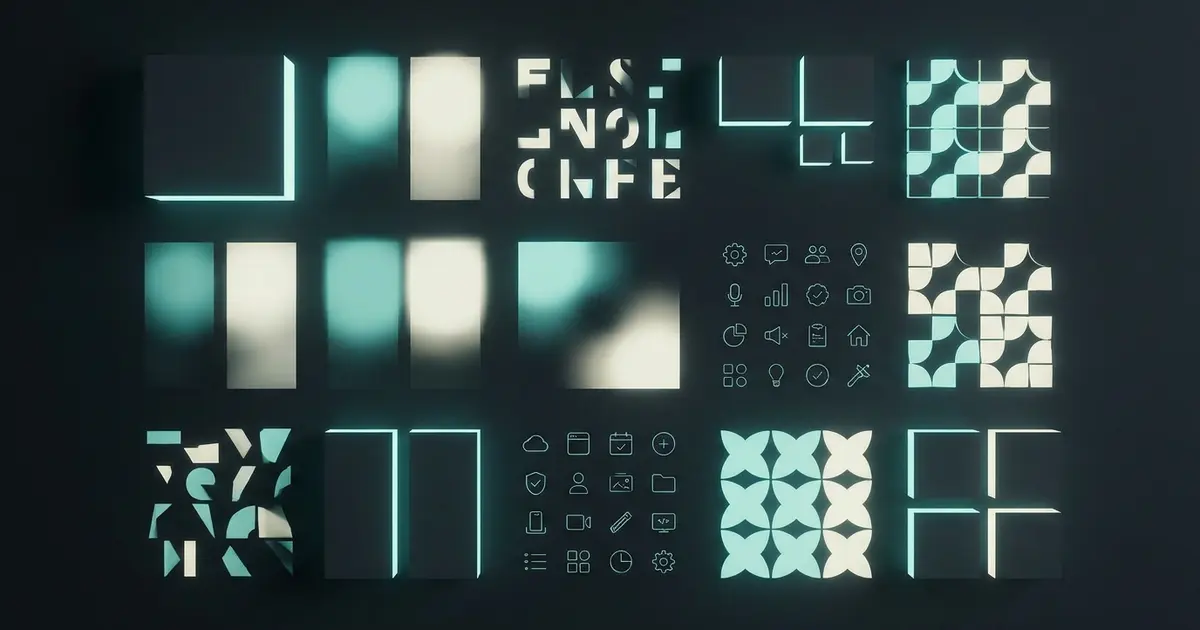
Most businesses think of their visual brand as a logo and maybe a colour palette. That's not a brand identity — it's a starting point. The gap between a business that looks professional and one that genuinely gets remembered is almost always explained by the depth and coherence of their visual identity system. A system is what happens when you think beyond the logo and start codifying every visual element that your brand touches.
In an era where your brand appears simultaneously on a website, social posts, proposal documents, physical packaging, email signatures, and video thumbnails, consistency across all of those surfaces is the visible expression of professionalism. That consistency doesn't happen by accident. It happens because someone built a system.
A complete visual identity system goes significantly beyond logo and colour. Here's what it should codify:
Not just the primary logo, but the full suite: primary logo, logo mark (icon only), wordmark (text only), horizontal and stacked lockups, reversed/white versions, and clear spacing rules. Most professional brands need five to eight logo variants to work effectively across all use cases. A logo with no variants is a logo that will be misused.
A primary palette is the foundation — typically two to four brand colours. But a complete colour system also specifies neutral tones, text colours, background colours, and a set of functional colours (success, error, warning states for digital interfaces). It includes exact values across every format needed: HEX, RGB, CMYK, and Pantone where relevant.
Typography is one of the most underspecified areas in most brand guides. A full type system defines the primary typeface (and fallbacks), secondary typeface if any, the heading hierarchy (H1 through H4), body text sizes and weights, caption and label styles, and the appropriate use case for each. It should also address line height, letter spacing, and maximum line length for readability — details that matter enormously in web and document contexts.
A shallow brand guide — the kind that says "our colours are teal and off-white, here's the logo" — breaks down the moment a second person touches the brand. When your marketing team creates a social graphic, your developer builds a new web page, and your operations team sends a proposal, they all make individual judgment calls in the absence of clear guidance. The result is a brand that looks slightly different everywhere — which signals, subconsciously, that the organisation itself lacks cohesion.
A visual identity system isn't about constraining creativity. It's about freeing your team to create on-brand without needing a designer's approval for every decision.
Consistent brands are also perceived as more trustworthy. Research consistently shows that visual consistency correlates strongly with perceived professionalism and reliability — two attributes that are disproportionately valuable for service businesses where the client is buying an intangible outcome before they experience it.
For an early-stage business, building a system from scratch is the right investment once you've validated the business model and are ready to scale your marketing. Don't over-invest in brand before you know who your customer is — but don't neglect it indefinitely either.
For an established business, a brand refresh doesn't mean starting over. It means auditing what exists, codifying what's working, and filling in the gaps — particularly the system elements (photography style, iconography, layout grids) that were never specified. Most brand refreshes for businesses with existing visual assets can be completed in four to six weeks and result in a dramatically more deployable brand toolkit for the team.
A logo is a mark. A brand identity system is an asset — one that compounds in value as it's applied consistently across every customer touchpoint. The businesses that look most polished and coherent at scale aren't those that spent the most on design. They're those that invested in building a system and then used it rigorously. That discipline is accessible to businesses of any size, and the returns in perceived quality and brand trust are real.
We design complete visual identity systems for growing businesses — from strategy to brand guidelines to deployment across every channel.
Talk to us